
TRENDING
September 9, 2025
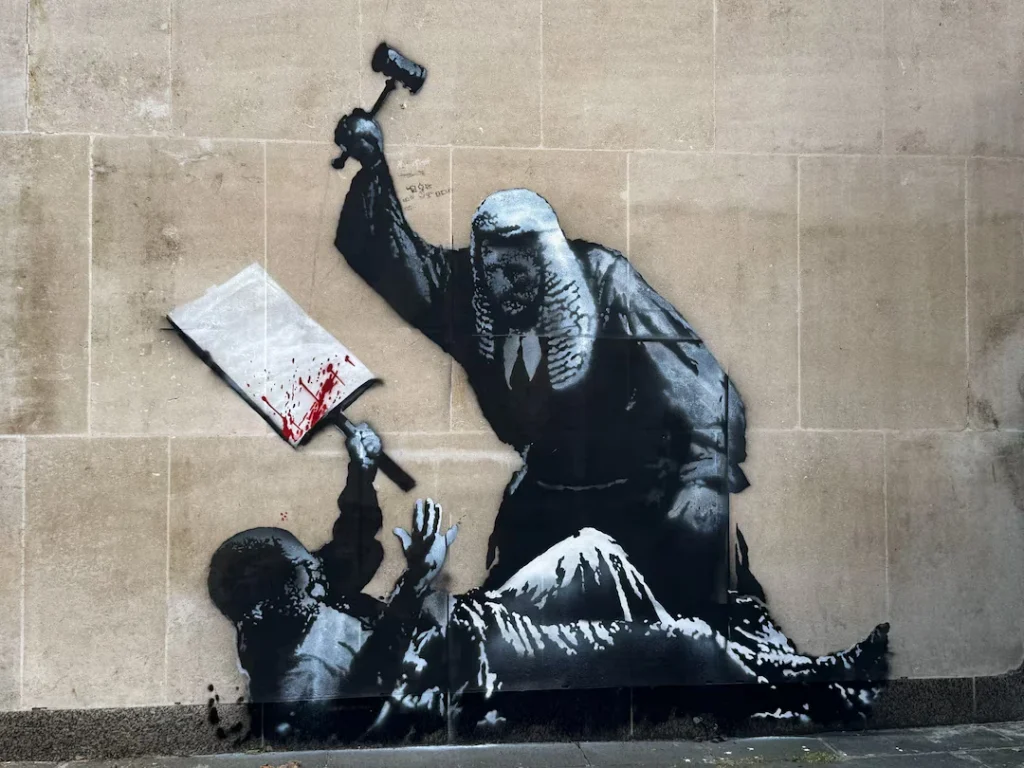
A new mural by the elusive street artist Banksy has appeared on the exterior of London’s Royal Courts of Justice, depicting a judge striking a protester with a gavel. The artwork, which features a bloodied placard held by the protester, was confirmed as authentic by Banksy via his Instagram account. Authorities have reported the mural as criminal damage and plan to remove it due to the building’s listed status.
The mural’s appearance coincides with recent protests supporting the banned pro-Palestinian group Palestine Action, during which nearly 900 individuals were arrested. Activist group Defend Our Juries has praised the mural as a powerful statement against state repression. However, HM Courts and Tribunals Service has stated that the artwork will be removed to preserve the integrity of the 143-year-old building.
The Metropolitan Police have launched an investigation into the mural, which could potentially lead to the revelation of Banksy’s identity. The artist has previously maintained anonymity, and any legal proceedings could bring attention to his concealed persona.
The mural has drawn public and media attention, particularly given its prominent location on the Royal Courts of Justice, a highly protected heritage building. Although Banksy has not explicitly commented, the artwork aligns with his history of pro-Palestinian messages, including past murals on the West Bank barrier. Critics from all sides are questioning whether the UK’s legal and political measures are undermining the right to peaceful protest.
Photos show barriers now surround the mural, highlighting concerns about its preservation and the message it conveys. The artwork has been covered by large sheets of black plastic and metal barriers, with security personnel stationed nearby. Despite the efforts to conceal it, the mural has been widely photographed and shared on social media.
As the investigation continues, the fate of the mural remains uncertain. Its removal could spark further debate about the intersection of art, politics, and the law. For now, the mural stands as a silent witness to the ongoing tensions surrounding freedom of expression and state authority.